Client type
Major automotive retail group
Case Study
How Proteance helped clarify scope, classify requirements, and make implementation risk more visible across CRM, Contact Center, data, and integration work.
Proteance worked with a major automotive retail group to bring structure to a broad CRM and Contact Center modernization requirement set. The work covered Dynamics 365 CRM, Contact Center, Power Platform, Dataverse, Customer Voice, marketing, customer profiling, assessed DMS integration needs, analytics, automation, and related delivery planning.
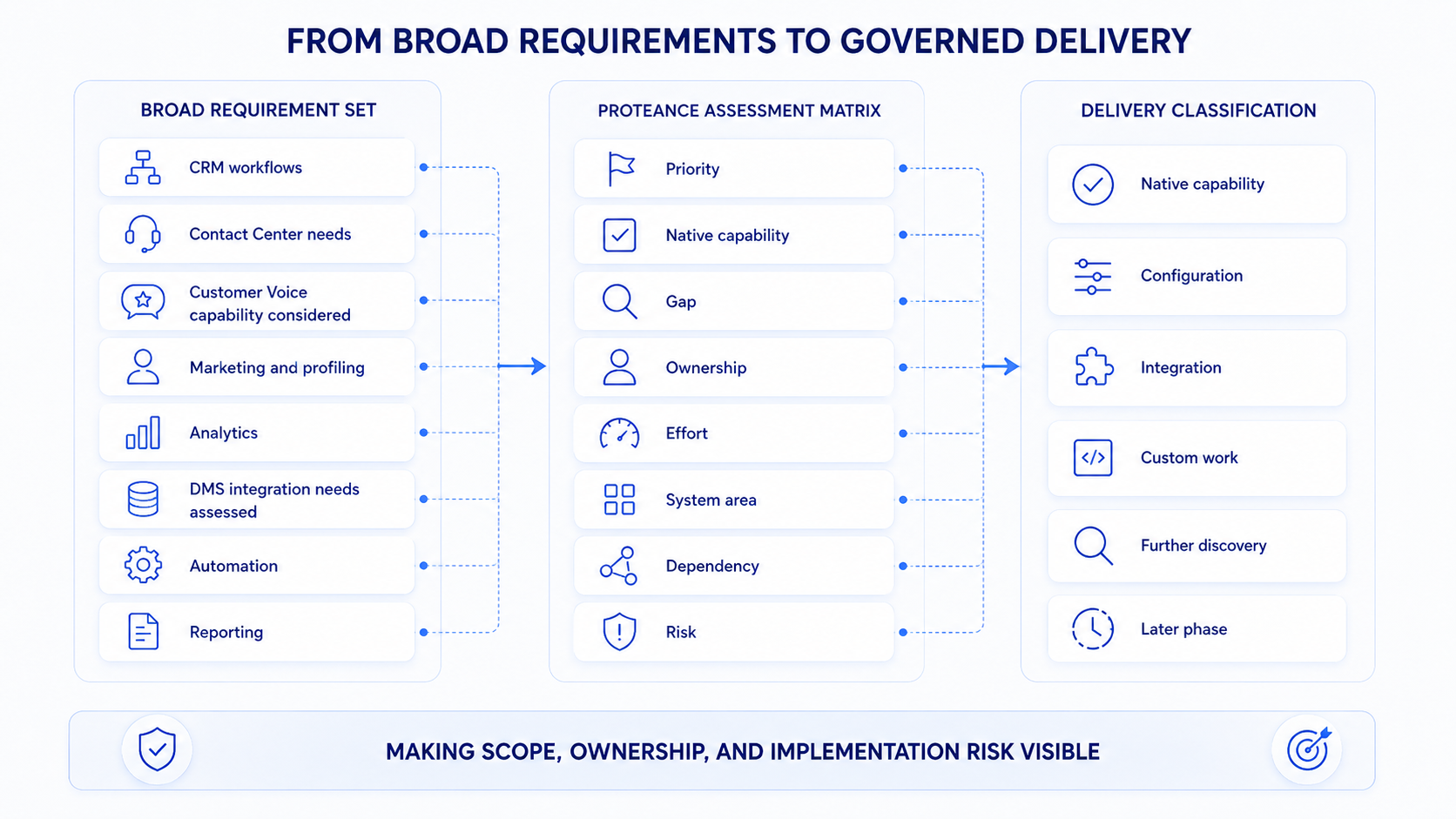
The engagement focused on turning ambition into a clearer delivery view. Proteance helped classify requirements by priority, native platform capability, gap, ownership, effort, system area, and dependency. This made it easier to distinguish what could be supported by Microsoft capability, what required configuration, what depended on integration, and what needed further discovery or later-phase planning.
The work did not claim completed organization-wide implementation. Its value was in scope clarification, delivery planning, governance, and making implementation risk more visible before larger delivery commitments were made.
Client type
Major automotive retail group
Sector
Automotive retail
Focus areas
Requirements structuring, delivery planning, CRM, Contact Center, data, integration, governance
Technologies considered
Dynamics 365 CRM, Dynamics 365 Contact Center, Power Platform, Dataverse, Customer Voice, marketing, customer profiling, analytics, assessed DMS integration needs
Proteance role
Requirements clarification, delivery planning, capability classification, implementation risk review
Delivery status
Structured assessment and delivery planning support. No organization-wide implementation completion or measured operational outcomes are claimed.
The client was a major automotive retail group reviewing a broad CRM and Contact Center modernization opportunity.
The wider engagement touched several areas of customer engagement and operational technology, including CRM, Contact Center, customer feedback, marketing, customer profiling, assessed DMS integration needs, analytics, automation, and data management.
The challenge was not only to identify desirable capabilities. It was to understand how those capabilities could be turned into practical delivery work. The client needed a clearer view of scope, ownership, dependencies, platform fit, and implementation complexity before the programme could be reliably sequenced.
Large CRM and Contact Center programmes often begin with broad requirements. These may include customer visibility, omnichannel handling, assessed DMS integration needs, case management, marketing automation, Customer Voice capability consideration, reporting, service workflows, customer profiling, consent handling, and operational dashboards.
At first glance, these requirements can appear to belong to the same backlog. In reality, they represent different types of work.
Some requirements may be supported by existing Dynamics 365 or Microsoft platform capabilities. Some require configuration. Some depend on Dataverse modelling. Some require integration with dealership or legacy systems. Some may need custom development. Others should be deferred until the operating model is clearer.
Without structure, the programme can become difficult to estimate, sequence, and govern. Native capability may be mistaken for delivery readiness. Integration dependencies may be underestimated. Scope may appear either simpler or larger than it really is.
Proteance acted as a requirements clarification and delivery planning partner.
The role was to review, map, structure, classify, and sequence requirements in a way that reflected both automotive retail operations and Microsoft platform capability.
Proteance helped distinguish between native capability, configuration, data modelling, integration, custom work, further discovery, and later roadmap maturity. This gave business and technical stakeholders a more practical way to discuss what needed to happen before implementation decisions were made.
The value was not in claiming that every requirement had been solved. The value was in reducing ambiguity and making delivery risk more visible.
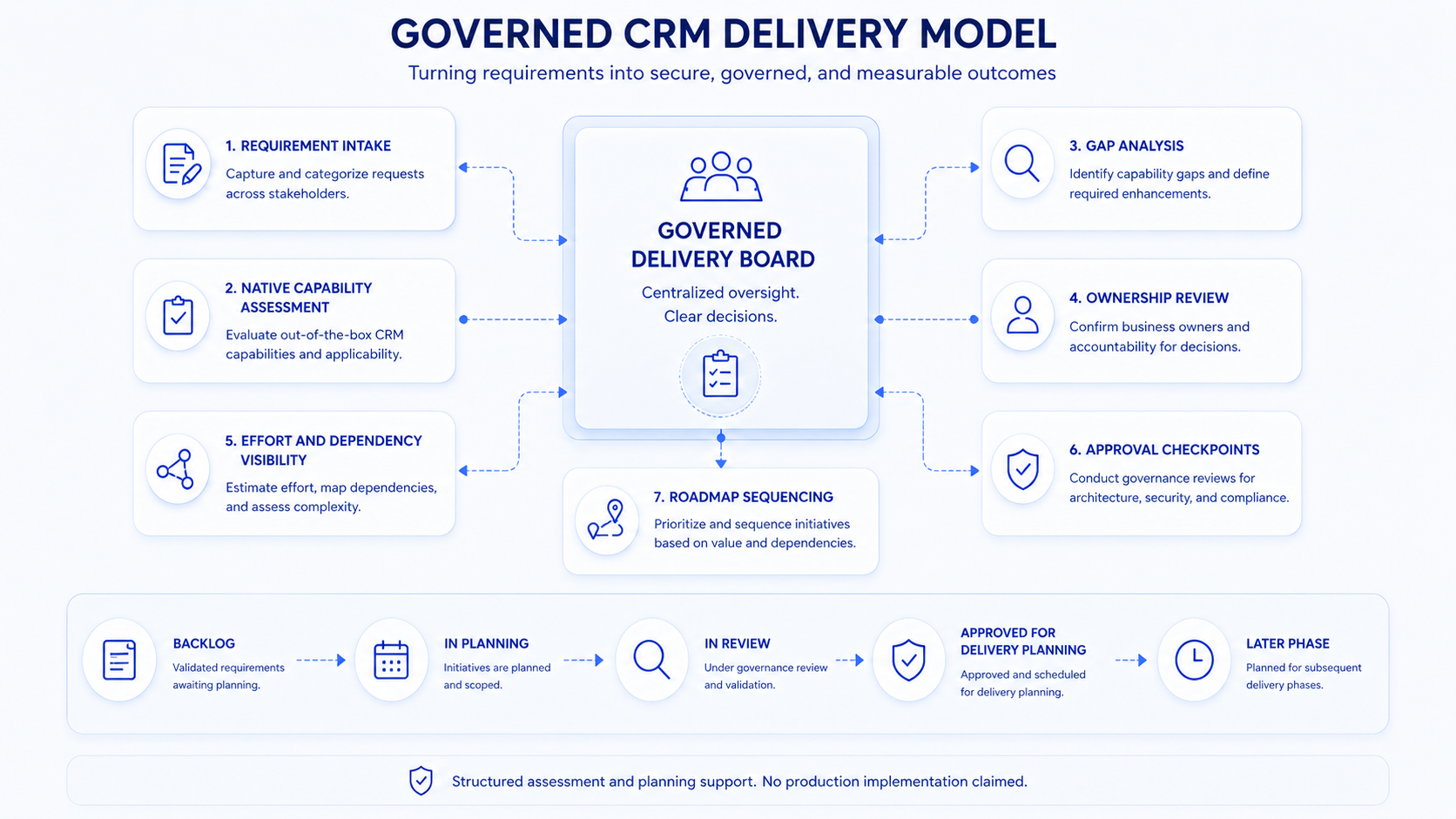
Proteance delivered a structured delivery view using a requirements matrix or comparable planning model.
The assessment covered functional and technical areas including Contact Center, assessed DMS integration needs, Dynamics 365 CRM, Customer Voice capability consideration, marketing, customer profiling, analytics, automation, user experience, data, and integration.
Each requirement was considered through practical delivery dimensions such as business priority, native platform capability, functional or technical gaps, likely ownership, effort, system area, and dependency on configuration, integration, custom work, or further planning.
This helped move the engagement away from a simple list of requested features and toward a more reliable view of what would be required to deliver them.
The delivery model made the programme easier to understand and discuss.
It showed where Microsoft capability could potentially be used natively, but also where configuration, process design, data modelling, testing, security, and change management would still be required.
It exposed integration dependencies, especially where requirements depended on DMS-related data, customer history, service activity, operational status, or analytics. These items could not be treated as isolated CRM features because their delivery depended on data quality, ownership, timing, and system connectivity.
It also helped separate immediate priorities from later-phase work. This made it possible to discuss MVP scope, deferred items, dependencies, risks, and assumptions with more discipline.
Most importantly, it showed that requirements structuring is not administrative overhead. It is a practical way to make implementation risk visible.
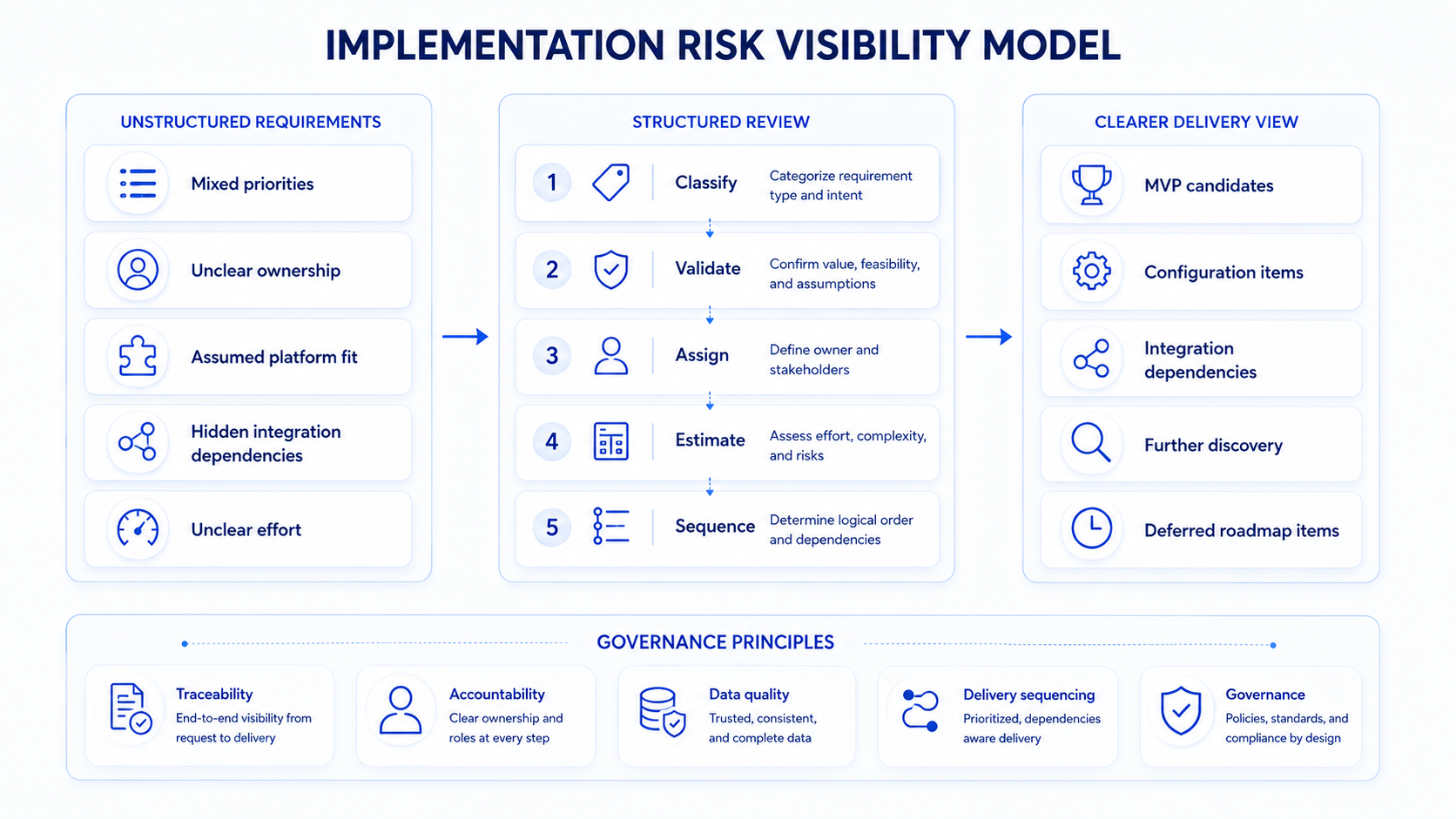
Many organizations begin CRM, Contact Center, Power Platform, or data modernization work with a mixed set of business requests, platform assumptions, and integration expectations.
In automotive retail, this problem is especially common because customer engagement touches sales, service, Contact Center, marketing, customer experience, data, reporting, and legacy dealership systems.
A structured delivery model helps prevent broad ambition from becoming unmanaged scope. It helps leaders see which work can move quickly, which work depends on integration, which items need further design, and which assumptions must be validated before delivery commitments are made.
For similar organizations, the lesson is clear: requirements should be clarified before implementation accelerates. A better-structured requirement set gives the programme a stronger basis for governance, sequencing, delivery ownership, and risk management.