Global
Multi-region buyer and partner workflows
Case Study
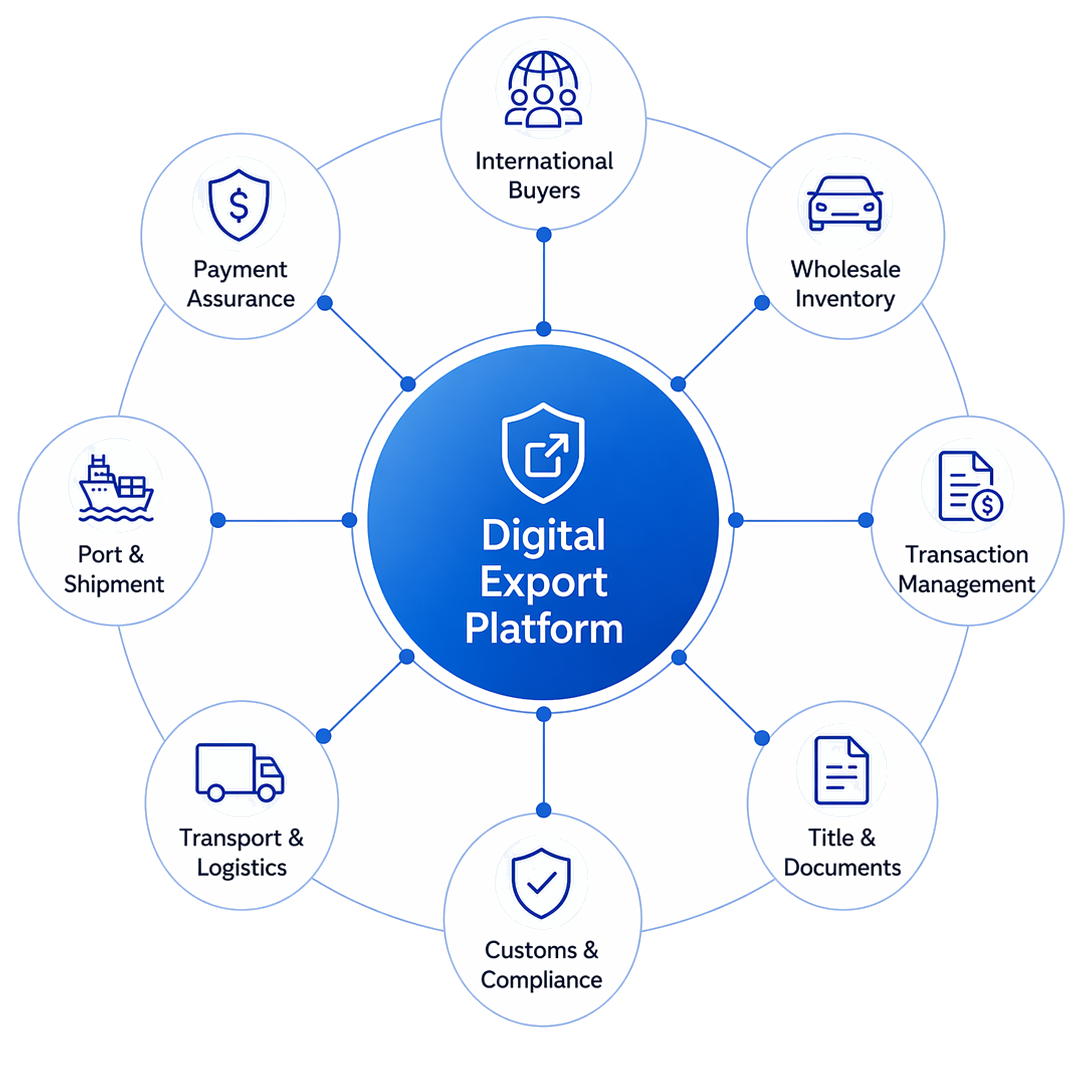
This case study reflects founder-led experience connected to a customer-facing automotive export platform that supported international vehicle sourcing, auction connectivity, transaction processing, title and document handling, logistics coordination, payment assurance, shipment workflows, and operational visibility across multiple parties and regions.
While this case study reflects experience with international automotive trading platforms, the principles are directly applicable to Canadian dealership operations. Dealership software must handle valuable assets (vehicles), sensitive customer and operational data, external user access (customers, partners), secure workflows, reliable availability, and governed document and transaction handoffs. The same framework;role-based access, workflow visibility, operational reliability, and platform trust;applies to core dealership systems.
Global
Multi-region buyer and partner workflows
End-to-end
Journey visibility from sourcing to shipment
Controlled
Role-based access, workflow status, and handoffs
Background
The platform supported international vehicle sourcing, allowing remote buyers to access inventory and participate in automotive trading activity without being physically present at the point of sale.
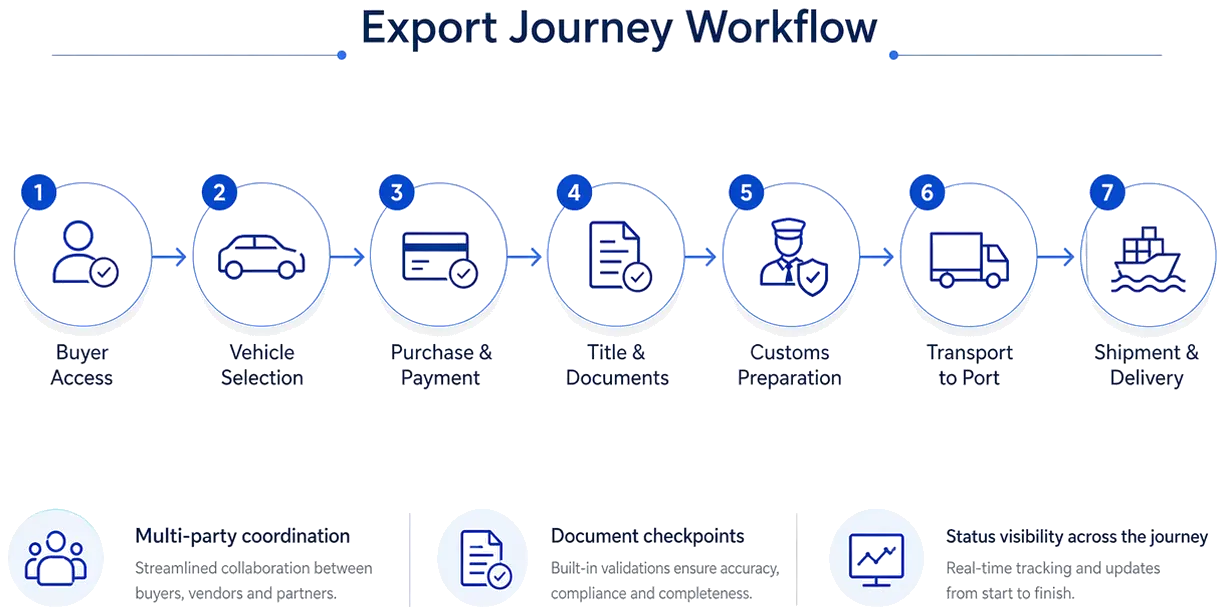
The operating model involved a customer-facing web portal, vehicle inventory visibility, auction-related activity, transaction processing, payment assurance, title and ownership documentation, export preparation, transport coordination, port movement, and shipment workflows.
This type of platform depends heavily on trust. Buyers need confidence that they can access the system reliably, view relevant inventory, participate in the sourcing process, and understand transaction progress. Operators need confidence that payments, documents, titles, logistics, and workflow controls are progressing correctly.
Because users operated across regions, the platform also needed reliable access, practical performance, load-balanced availability, and clear status information.
Challenge
The central challenge was operational complexity. External users needed a customer-facing portal they could rely on for inventory, auction-related activity, transaction status, and document progress.
Sellers and operating teams needed confidence that each transaction was governed, visible, and supported by accurate data. Vehicle records, buyer details, payment information, title documents, transport activity, and shipment milestones all needed to remain aligned.
Simulcast vehicle auction connectivity added timing and integration complexity. Buyer activity, inventory availability, auction outcomes, transaction triggers, and downstream fulfilment workflows needed to connect reliably.
Transport and logistics added another layer. Vehicles had to move through providers, locations, ports, and shipment stages. Missing information, weak handoffs, or unclear exception paths could create delay, cost, and reduced confidence.
Solution
The solution pattern centred on bringing structure, reliability, and control to the end-to-end operating model.
The platform required secure access for external and internal users. Role-based permissions were important because authorised participants needed different levels of visibility and authority.
Availability and performance were business requirements, not just technical considerations. If users depend on a platform to make decisions and progress transactions, reliability becomes part of the trust model.
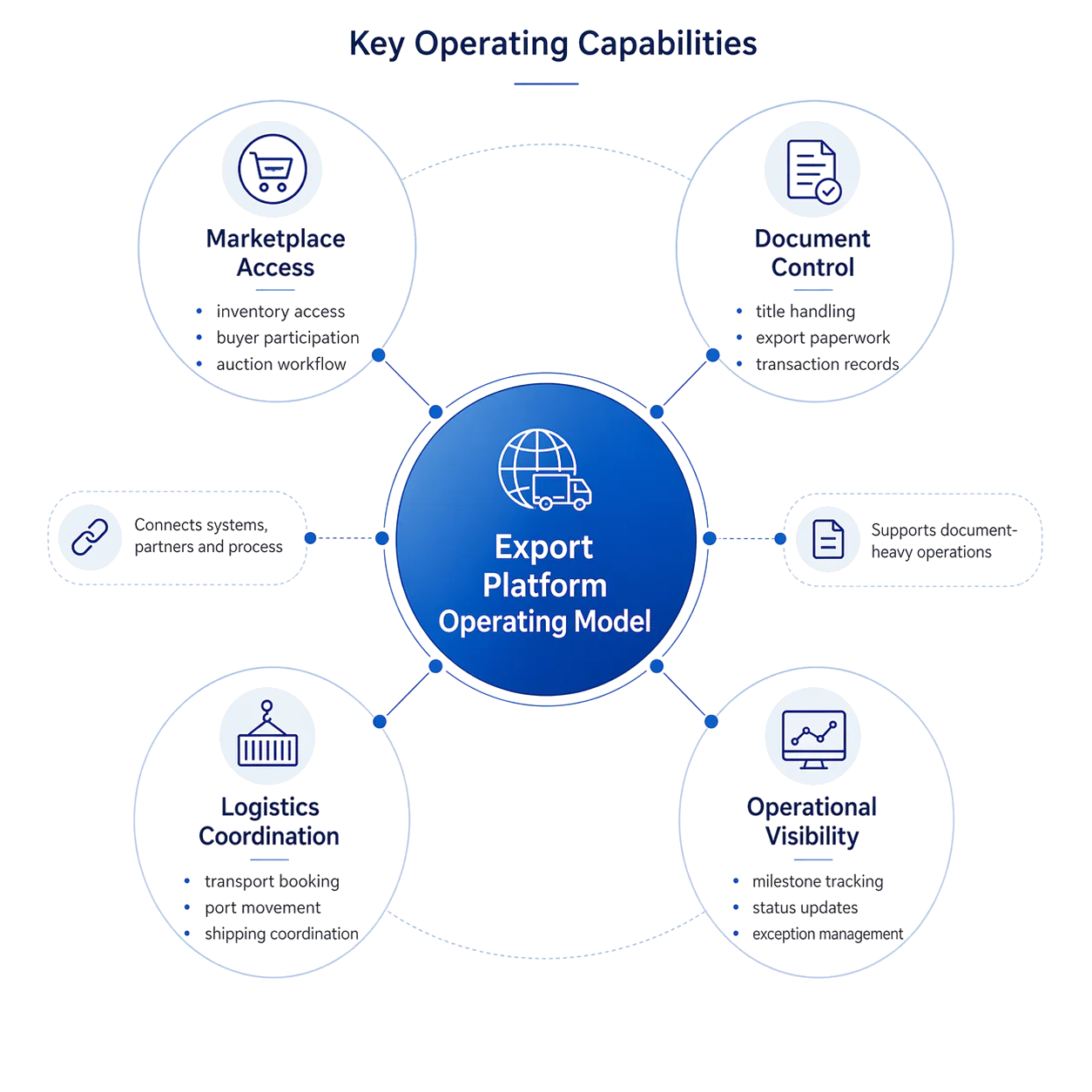
Purchase activity, payment confidence, title handling, document control, auction outcomes, logistics coordination, and shipment status all needed to work from trusted records.
Each workflow stage needed status, ownership, and exception visibility. That allowed operating teams to see what had happened, what was pending, and where intervention was required.
The platform became an operating layer connecting data, documents, users, auctions, partners, workflows, availability, and reporting.
Transformation
No unsupported performance metrics are claimed here. The impact is best understood in operational terms.
Stronger workflow control improved confidence in complex automotive processes. When data, documents, status, and responsibilities are clearer, teams are better able to manage exceptions and reduce ambiguity.
The customer-facing nature of the platform reinforced another lesson: availability matters. When external users rely on a system for inventory access, auction participation, transaction progress, and document status, reliability directly affects commercial confidence.
The broader value was a more controlled operating model, creating a stronger foundation for future integration, reporting, analytics, and trusted digital participation.
Platform reliability is part of business trust. Users need confidence that the system will perform when decisions, transactions, and operational handoffs matter.
Why It Matters
Many automotive businesses depend on fragmented systems, external platforms, manual uploads, partner networks, web portals, live feeds, document exchanges, and sensitive commercial data.
The challenge is not only how to collect information. It is how to protect it, normalise it, govern access to it, and turn it into useful operational intelligence.
A strong platform model creates a trusted layer for data movement, workflow visibility, reporting, and governed third-party access. It can support centralised control without removing local ownership.
Proteance Lens
This founder-led experience informs how Proteance approaches secure digital platform design today.
Proteance focuses on the operating model behind the technology: who owns the data, who can access it, how it moves, how it is protected, how it is normalised, and how it creates useful visibility for operators and decision-makers.
The same thinking supports practical pilot-to-production delivery and governed integration across participants and systems.
Planning a data-led platform, customer portal, or integration strategy? Proteance can help assess the operating model, identify the control points, and shape a practical path from pilot to production.
This case study reflects founder-led experience that now informs Proteance's approach. It is presented to illustrate relevant automotive platform, workflow, data, web portal, availability, and integration experience.